By : Mrs. Syarifah Sheril Azlin binti Syed Baharin K.B.;P.A.
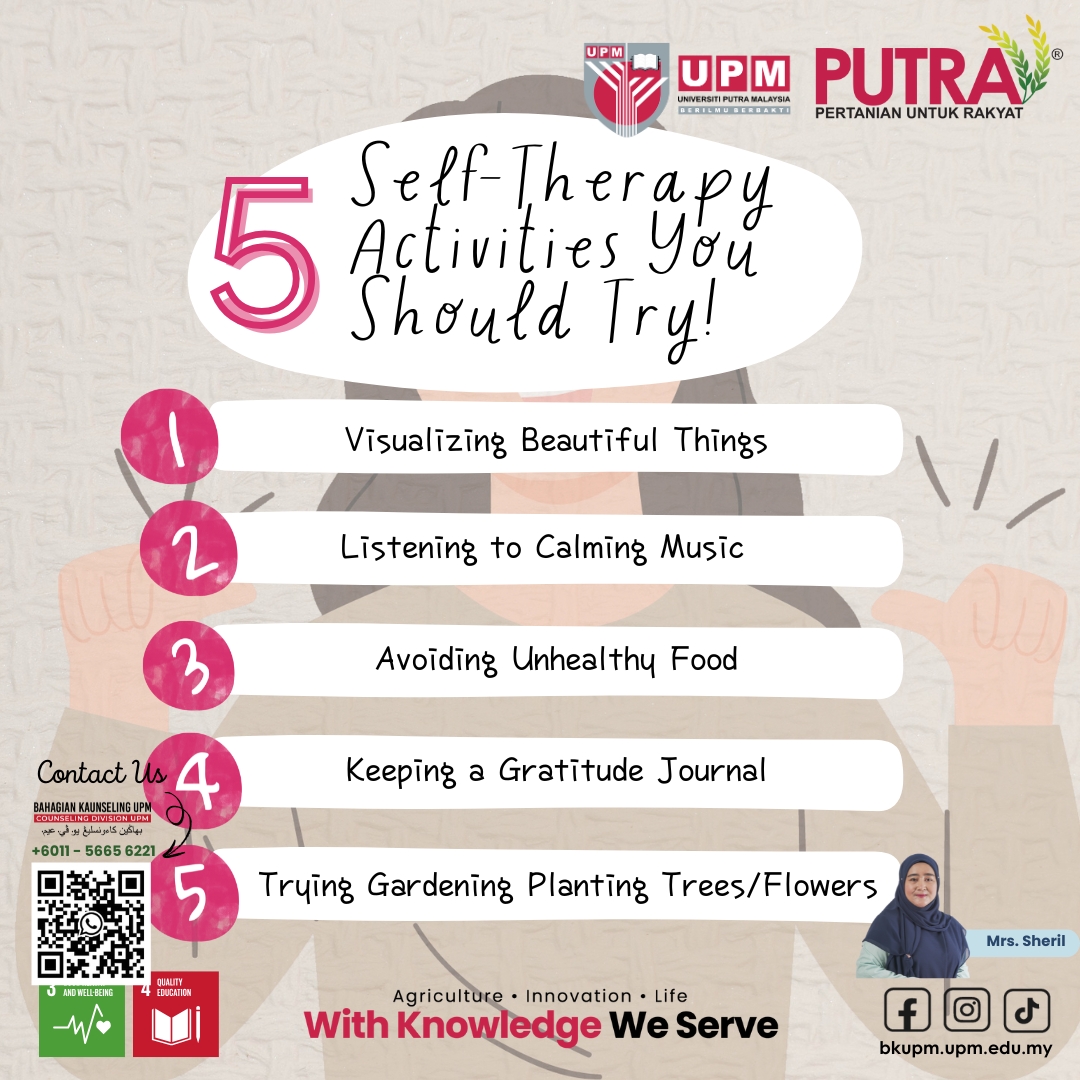
Self-therapy is a practical process that individuals can do on their own to improve their mental, emotional and spiritual well-being without professional help. It can involve various techniques and strategies such as meditation, journaling, exercise, creative arts, personal reflection or exploring personal values. The goal is to develop a deeper understanding of yourself, improve stress management, deal with emotional challenges and enhance overall quality of life.
Self-therapy can be a great complement to mental health care but is not a substitute for professional therapy if someone is facing serious psychological issues.
So, what kind of activities are suitable for self-therapy? Here are five you can try:
1) Visualizing Beautiful Things
Imagine a world where everyone lives in harmony and kindness. Through these peaceful visualizations, we can find beauty in human interactions and prioritize goodness in everything we do. Let’s explore some calming, hopeful mental images:
- Human Harmony: Picture a world where people accept, respect, and understand each other, regardless of race, religion, or background. Everyone treats one another like family, helping and appreciating each other’s uniqueness.
- Green, Balanced Nature: Envision a clean and thriving environment, with lush forests, flowing rivers, and fresh air. People live in harmony with nature and take care of Earth for future generations.
- Inspiring Art and Creativity: Imagine a world filled with music, writing, and paintings that uplift the soul. Artists inspire others with meaningful and beautiful creations.
- Kindness and Generosity: Think of a society where people help others freely without expecting anything in return. Small acts of kindness have big impacts on people’s lives.
- Openness and Understanding: Picture communities where differences in opinion are respected and seen as learning opportunities. Through open dialogue, deeper understanding grows between people.
These calming visions can bring hope and inspiration. Let’s work together to make such a world a reality.
2) Listening to Calming Music
Listening to calming music can be a deeply healing and beautiful experience. Imagine yourself in a cozy room, soft lights glowing, and you press play on your favorite peaceful playlist.
Gentle melodies like soft piano or instrumental sounds fill the air and slowly relax your mind. As you listen, you may feel the music flow through your body - soothing your stress, easing tension, and bringing peace to your heart.
You might feel as if you’re floating among clouds, leaving behind the worries of your day. Calming music helps you rest, reflect, and reconnect with a sense of inner peace. Some songs may even bring spontaneous joy or a quiet smile.
This simple activity can refresh your spirit and fill your world with peace and beauty.
3) Avoiding Unhealthy Food
Avoiding unhealthy food is an important step toward better health and well-being. Here are some simple tips to help you make healthier food choices:
- Plan Healthy Meals: Make a weekly meal plan that includes vegetables, fruits, whole grains, good-quality protein, and healthy fats.
- Bring Healthy Snacks: Keep fruit slices, fresh veggies, or healthy bars with you to avoid junk food when you're out.
- Shop Smart: Focus on buying whole, nutritious foods. Read food labels to choose wisely.
- Limit Fast/Processed Foods: Avoid heavily fried or processed meals. Choose to steam, bake, or boil your food instead.
- Control Portion Sizes: Be mindful of how much you eat—balance your meals and avoid overeating.
- Cut Down on Sugar: Reduce sugary drinks and snacks. Choose plain water, green tea, or natural fruit juice instead.
- Limit Salt: Processed foods are usually high in salt. Reducing salt can lower the risk of high blood pressure and heart problems.
By following these tips, you’ll take control of your diet and support your physical and mental health.
4) Keeping a Gratitude Journal
Writing in a gratitude journal is a powerful tool for emotional wellness. It helps shift your focus from negativity to positivity. Here's how you can get started:
- Choose a Daily Time: Write at the same time each day—morning or evening works best.
- Find a Quiet Space: Choose a calm place where you can think and reflect peacefully.
- Set a Goal: For example, write down three things you're grateful for every day.
- Be Honest and Specific: Reflect deeply. Write about big or small things that made you feel thankful.
- Focus on Feelings: Allow yourself to feel the gratitude as you write. Let it uplift your mood.
- Make It a Habit: Write daily. Over time, it will become a natural part of your routine.
- Appreciate the Small Things: Don’t overlook small blessings. Gratitude often hides in simple moments.
- Share Gratitude with Others: Telling others what you're thankful for can strengthen social bonds.
- Use Any Format: Write full sentences, lists, or even draw if you prefer—it's your personal journal.
- Use It as a Reminder: Look back on your journal during tough times to remind yourself of life’s goodness.
A gratitude journal helps you develop a more positive outlook and is a great way to nurture inner peace and joy.
5) Trying Gardening - Planting Trees or Flowers
Gardening is a peaceful and meaningful activity that connects you with nature. Whether you plant a tree, herb, or flower, it can bring calm and satisfaction. Here’s how to start:
- Choose the Right Spot: Pick a place with sunlight and good soil.
- Decide What to Grow: Vegetables? Herbs? Flowers? Choose something suitable for your area.
- Prepare the Soil: Clear the ground and mix in compost or fertilizer for healthy growth.
- Plant Seeds or Seedlings: Follow the planting instructions and give enough space between plants.
- Water and Care Regularly: Keep your plants hydrated and fed based on their needs.
- Observe and Maintain: Watch their growth, remove dead leaves and protect from pests.
- Enjoy the Process: Watch your plants grow and feel the joy of nurturing life.
- Get Family or Friends Involved: Gardening together can improve relationships and make it more fun.
- Keep Learning: Try different plants and learn new gardening skills over time.
- Record Your Journey: Use a journal or photo album to track your progress and memories.
Gardening not only adds beauty to your space, but also helps calm your mind and reconnect with the natural world. These five self-therapy activities are simple yet powerful. By practicing even just one regularly, you may find greater peace, joy, and emotional balance in your everyday life.
Date of Input: 23/06/2025 | Updated: 23/06/2025 | ayna
MEDIA SHARING





.png)
.png)