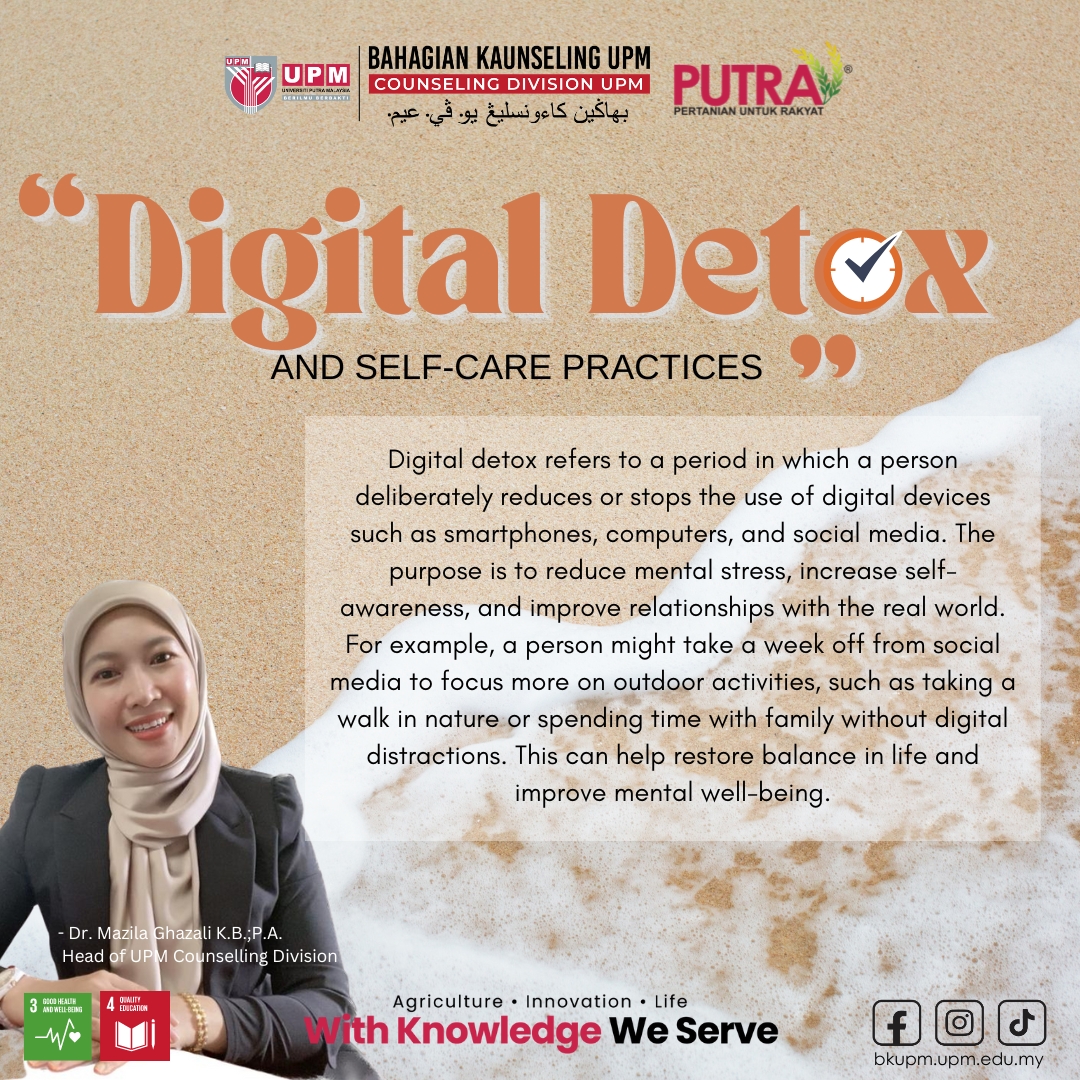
By: Dr. Mazila binti Ghazali K.B.;P.A.
1. What is meant by digital detox?
Digital detox refers to a period in which a person deliberately reduces or stops the use of digital devices such as smartphones, computers, and social media. The purpose is to reduce mental stress, increase self-awareness, and improve relationships with the real world. For example, a person might take a week off from social media to focus more on outdoor activities, such as taking a walk in nature or spending time with family without digital distractions. This can help restore balance in life and improve mental well-being.
2. Signs you need a digital detox
There are several signs that indicate you may need a digital detox. Here are some indicators to watch out for:
Anxiety or Stress:
If you often feel anxious, depressed, or irritable after using social media or spending time in front of a screen, this may be an indication that you need to take a break from the digital world.
Sleep Disorders:
If you have trouble falling asleep or suffer from insomnia due to using your phone or computer before bed, this is a sign that your screen time needs to be reduced.
Feeling Isolated:
If you feel closer to friends online than to friends in the real world, this indicates a need to increase in-person interactions.
Excessive Social Comparison:
If you often compare yourself to others on social media and feel dissatisfied with yourself, this may indicate that you need to take steps to avoid such comparisons.
Lack of Focus:
If you find it difficult to concentrate on daily tasks due to distractions from notifications or the urge to check your device, this is a sign that you need to detox.
Other Neglected Activities:
If hobbies or other activities, such as reading, exercising, or spending time with family, are affected by too much screen time, then a detox may be necessary.
Lack of Self-Awareness:
If you feel isolated from yourself or don't know what you want in life, taking a break from the digital world can help you reflect and get to know yourself.
Addictive Feeling:
If you feel the need to check your phone every few minutes or feel restless when there is no device at hand, it is a sign of digital addiction.
Conclusion:
Recognizing these signs is the first step to taking action. If you're experiencing some of the above signs, it might be time to do a digital detox and improve your mental well-being and your connection to the real world.
3. Why do we need digital detox?
Digital detox needs to be implemented for several reasons that are important for our mental and physical well-being. Here are some profound reasons:
Reduce Stress and Anxiety:
Excessive use of social media and news often triggers feelings of anxiety and depression. By detoxing, we can reduce exposure to negative information and improve our mental state. For example, after completing a detox, many report feeling calmer and less stressed.
Improves Sleep Quality:
Screen displays before bed can disrupt sleep patterns. The blue light from the device inhibits the production of melatonin, the sleep hormone. By reducing the use of devices at night, we can improve the quality of sleep and feel more refreshed the next day.
Improve Social Connections:
Too much time in the virtual world can reduce face-to-face interaction. By detoxing, we can focus on deeper and quality relationships with family and friends. For example, spending a weekend without a smartphone allows for more conversations and activities together.
Increase Productivity:
Distractions from notifications and social media can reduce our ability to focus. By taking time to detox, we can increase concentration and productivity in work or learning. Many people report an improvement in task completion after undergoing a digital detox.
Encouraging Self-Awareness:
Without digital distractions, we have more opportunities to reflect and get to know ourselves. This can help us better understand our needs, desires, and goals in life.
Creating Space for Other Activities:
Detox allows us to try new activities such as gardening, art, or sports that may have been neglected due to excessive focus on devices. For example, someone taking a detox may find a new interest in painting or outdoor activities.
Reducing Social Comparison:
Social media often encourages unhealthy comparisons with other people's lives. This can lower a person's self-esteem and happiness. With detox, we can shift the focus from the lives of others to our own lives.
Conclusion:
Digital detox is not just a trend, but a necessity to ensure our mental and physical health is maintained. By reducing our dependence on technology, we can restore balance in life, enjoy more meaningful experiences, and improve the overall quality of life.
4. How to do a digital detox?
Doing a digital detox can be a simple and effective process with a few simple steps. Here's how to do it:
Set Clear Goals:
Start by defining what you want to achieve. Do you want to reduce stress, improve sleep quality, or improve social relationships? Setting goals will motivate you.
Plan a Detox Period:
Decide how long you want to detox. This can range from a few hours a day to a few weeks. For example, you can try a detox for one weekend.
Control Device Usage:
Device-Free Time: Set a specific time each day where you will not use digital devices. For example, not using the phone during dinner.
Remove Notifications: Turn off notifications for non-essential apps. This helps reduce distractions.
Replace with Other Activities:
Find alternative activities that allow you to enjoy time without digital. This can include:
- Reading a book.
- Dive into hobbies like gardening or painting.
- Take a new class, like yoga or cooking.
Create a 'Screen Free Zone':
Designate an area of ​​your home as a 'screen-free zone', such as a bedroom or dining room. This helps create an atmosphere for direct interaction.
Engage in Outdoor Activities:
Spend time outside, such as walking in the park, hiking, or biking. Outdoor activities not only distract from the device but also provide health benefits.
Share with Others:
Invite friends or family to join this detox. By involving others, you can support each other and keep commitments.
Reflection and Analysis:
After the detox period, take time to reflect on your experience. How are you feeling? Are you calmer? What did you learn about yourself and your needs?
Create a Balanced Digital Routine:
After detox, set limits on technology use. For example, limit time on social media to 30 minutes a day or set a specific time to check email.
Conclusion:
Digital detox doesn't have to be complicated. With planned steps and a commitment to change your daily routine, you can enjoy a more balanced and meaningful life. Remember, the ultimate goal is to regain control over your time and improve quality of life.
5. What are the long-term effects of digital consumption?
Excessive digital use can have some significant long-term effects on individuals and society. Here are the five main effects:
Mental Health Problems:
Constant use of social media is often associated with an increased risk of depression, anxiety, and feelings of loneliness. Studies show that individuals who spend more time on social media tend to feel less satisfied with their lives, as they are often exposed to social comparisons.
Negative Effects on Sleep Quality:
Screen viewing before bed can disrupt sleep patterns and reduce sleep quality. This can cause long-term health problems such as obesity, diabetes, and heart problems, as well as affect cognitive function.
Poor Physical Health:
A more sedentary lifestyle due to excessive digital use can lead to physical health problems such as obesity, back pain, and posture problems. For example, those who spend a lot of time working in front of the computer often experience neck pain or tension headaches.
Loss of Social Skills:
Reliance on digital communication can reduce an individual's ability to interact face-to-face. This can cause difficulties in building strong and effective interpersonal relationships. For example, young people may be more likely to communicate through text messages than face-to-face conversations.
Impact on Productivity:
Excessive digital use, especially social media and entertainment applications, can interfere with concentration and productivity. This can affect performance at work or in education. Individuals may develop a habit of procrastinating due to constant distractions from digital devices.
Conclusion:
The long-term effects of digital consumption should not be underestimated. It is important to practice balance and take steps to reduce the use of technology in daily life to ensure good mental and physical health and healthy social relationships.
6. What is meant by self-care?
Self-care refers to the practices and activities that individuals do to maintain and improve their physical, mental, and emotional well-being. It is a way of recognizing and fulfilling one's needs, as well as building resilience against the pressures and challenges of life.
7. How important is self-care to practice?
Physical Aspects:
Keeping the body healthy through a balanced diet, regular exercise, and getting enough sleep. For example, putting together a healthy eating plan and engaging in physical activity such as yoga or walking.
Mental Aspects:
Take time to relax and reduce mental stress. This includes activities such as meditation, reading a book, or journaling to reflect and process feelings.
Emotional Aspects:
Helping individuals better recognize and manage their emotions. This can involve communicating with friends or family members, or seeking professional help if needed.
Social Aspects:
Build healthy relationships with others and engage in social activities. Joining hobby groups or community activities is a great way to build a support network.
Spiritual Aspects:
Finding meaning and purpose in life, which may involve religious practice, meditation, or activities that provide a sense of peace and acceptance.
Examples of Self-Care Practices:
- Morning Routine: Spend time meditating or exercising before starting the day.
- Tech-Free Day: Take a day to take a break from digital devices and enjoy outdoor activities and face-to-face interactions.
- Self-Education: Take online courses or read books on interesting topics to stimulate the mind.
Conclusion:
Self-care is not only important for individual well-being but also helps improve productivity and relationships with others. Practicing self-care consistently can help you feel more balanced and competitive in facing life's challenges.
8. How can digital detox support the self-care process?
Digital detox can support the self-care process:
Promote Awareness and Mindfulness
Without digital distractions, you can focus more on the present moment. For example, while enjoying a meal, you can fully focus on the taste and texture without being distracted by the phone. This helps increase awareness of what you are eating and makes the experience more satisfying.
Improve Family Relationships
By spending time without devices, you can bond with family. For example, having a technology-free game night or cooking together can strengthen family bonds and create precious, unforgettable memories.
Encourages Creativity
Taking time away from the digital world gives space to be creative. You can try activities like writing, drawing, or crafting. For example, having a drawing session with friends in the park can stimulate the imagination and provide a different kind of creative satisfaction.
Encourage Physical Activity
Digital detox provides an opportunity to be more physically active. For example, you can join a live dance or yoga class. This activity is not only beneficial for health but also helps reduce stress and improve mood.
Improve Yourself Through Reading
Taking time away from the device allows you to read books you might not otherwise read. For example, reading a book about self-development or interesting fiction can bring a new perspective and inspire your thinking.
Examples of Creative Digital Detox Practices:
30 Day Screen-Free Challenge:
Set a challenge to not use any screen (television, phone, tablet) for 30 days. Use this time to explore new hobbies or have one-on-one meetings with friends.
Picnic Without Devices:
Plan a picnic with friends and set a no-phone rule. This provides an opportunity to enjoy nature and interact without digital distractions.
Outdoor Activities Week:
Spend a whole week doing outdoor activities like hiking, biking, or gardening. Away from the device, you can appreciate the beauty of nature and feel the benefits of physical activity directly.
Conclusion
Digital detox provides an opportunity to appreciate real life experiences. By reducing your reliance on technology, you can feel a deeper presence of self, build stronger relationships, and improve overall well-being. The opportunity to connect with yourself and the world around you can bring a deeper sense of calm and happiness.
Date of Input: 02/09/2024 | Updated: 02/09/2024 | ayna
MEDIA SHARING





.png)
.png)