By : Mrs. Izwana Ismail
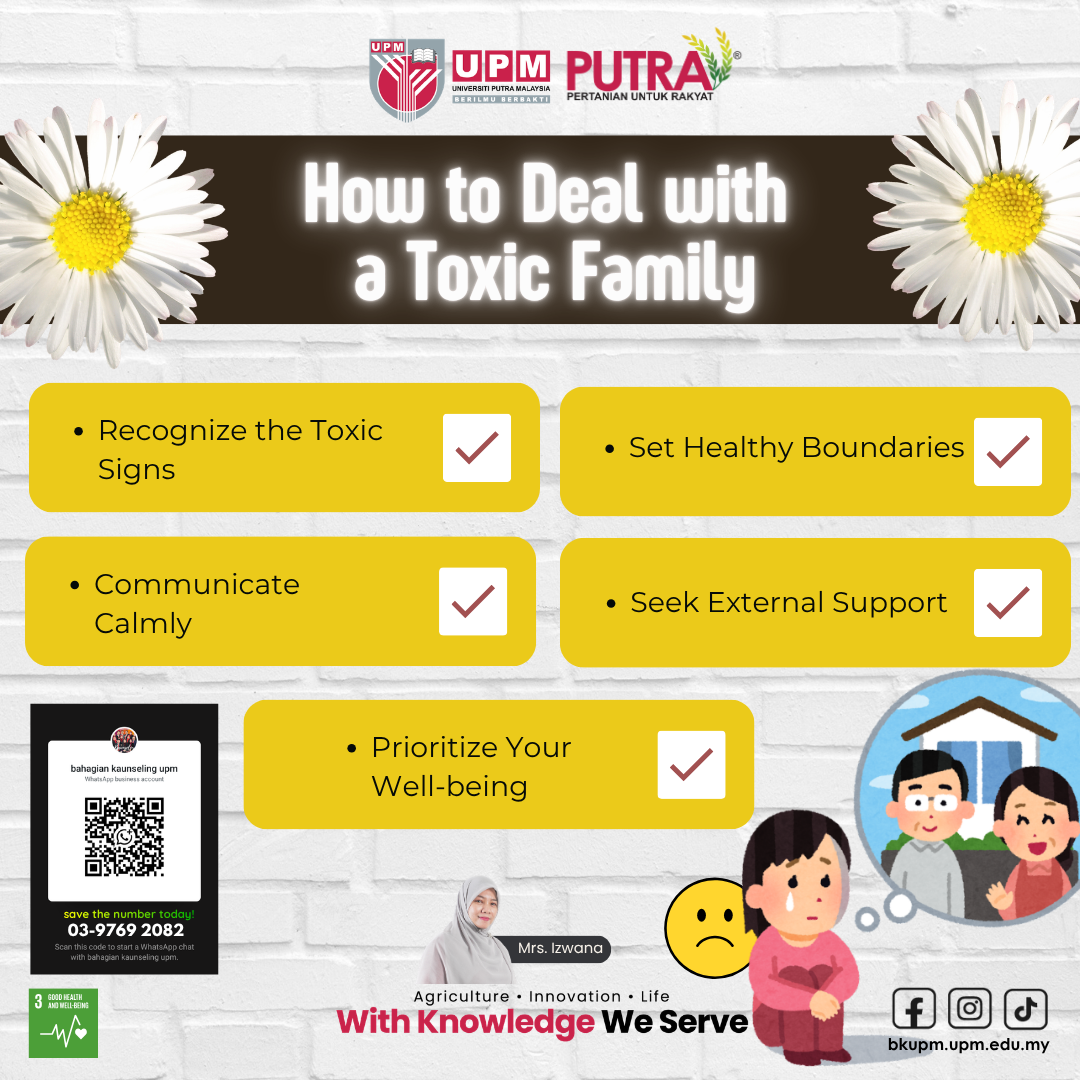
A family is supposed to be a place where one feels safe, valued, and loved. However, not all families function in a positive way. Some individuals may find themselves trapped in a toxic family environment, which can have a harmful impact on their emotional and mental well-being. A toxic family refers to an environment where destructive relationship patterns exist, such as tendencies for manipulation, violence, excessive criticism, or a lack of moral support.
Characteristics of a Toxic Family
One of the main characteristics of a toxic family is unhealthy communication, often accompanied by constant conflicts and emotional tension. Family members frequently behave harshly or fail to appreciate one another, leading to dissatisfaction and feelings of isolation. A toxic family can also foster feelings of low self-esteem, distrust, and fear among its members, trapping them in a destructive dynamic.
How to Deal with a Toxic Family
1. Recognize the Toxic Signs
The first step in dealing with a toxic family is recognizing that you are in an unhealthy environment. Understanding toxic signs, such as emotional manipulation or exposure to excessive criticism, is crucial for protecting yourself mentally and emotionally.
2. Set Healthy Boundaries
Establishing clear boundaries with family members is an effective way to maintain your well-being. This includes avoiding conversations or situations that may lead to conflict and informing family members when their behavior is unacceptable. These boundaries serve as a form of self-respect and prevent you from becoming further entangled in toxic dynamics.
3. Communicate Calmly
Communicating with toxic family members requires patience. Try to avoid reacting with extreme anger or sadness. Express your feelings and views in a calm and clear manner. This helps reduce tension and increases the chances of finding a better resolution.
4. Seek External Support
Sometimes, dealing with a toxic family alone can be very difficult. Therefore, seeking support from friends, counselors, or positive family members is crucial. They can provide a clearer perspective and offer emotional support in facing these challenges.
5. Prioritize Your Well-being
Ultimately, it’s important to prioritize your mental and physical well-being. If the situation becomes increasingly harmful, you may need to consider taking steps to limit your interactions with the toxic family, even though it may be difficult. Taking care of yourself should always be your top priority.
Conclusion
Dealing with a toxic family can be challenging, but with awareness, clear boundaries, good communication, and the right support, individuals can reduce the negative effects of such an environment. Remember that your well-being is the most important thing in creating a healthier and happier life.
Date of Input: 29/07/2026 | Updated: 29/07/2026 | ayna
MEDIA SHARING





.png)
.png)